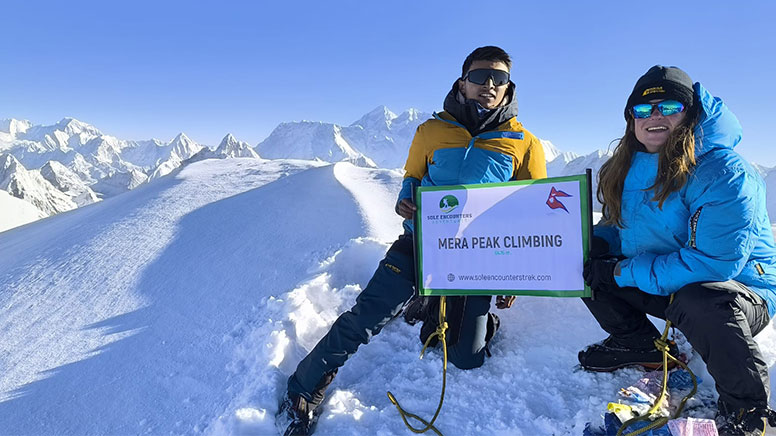
Mera Peak Climbing: A Complete Guide
- soleencounters
Introduction
Mera Peak, rising to 6,476 meters (21,247 feet), holds a special place in Nepal’s mountaineering landscape. It is often described as the highest trekking peak in the country, a phrase that attracts thousands of climbers every year. But this description can be misleading if taken at face value.
Table of Contents
Mera Peak is not a casual walk-up, nor is it a highly technical expedition peak. It sits in an important middle ground, bridging the world of high-altitude trekking and true Himalayan mountaineering. For many climbers, it is their first experience above 6,000 meters. For others, it is a training ground for even bigger objectives such as Island Peak, Baruntse, or future 7,000 and 8,000-meter climbs.
What makes Mera Peak unique is not just its height, but the number of ways it can be approached. Climbers can choose slower, more gradual routes focused on acclimatization, or shorter and more demanding itineraries designed for those with limited time and strong fitness. There are also advanced routes that combine Mera Peak with other summits or high passes, turning the journey into a serious alpine expedition.
This guide is designed to help you understand those options clearly. Rather than promoting a single way to climb Mera Peak, it explains what the mountain demands, who it is suitable for, and how good planning, preparation, and the right itinerary can make the difference between a safe, rewarding experience and an uncomfortable or unsuccessful one.
Understanding Mera Peak: Location, Landscape, and Natural Environment
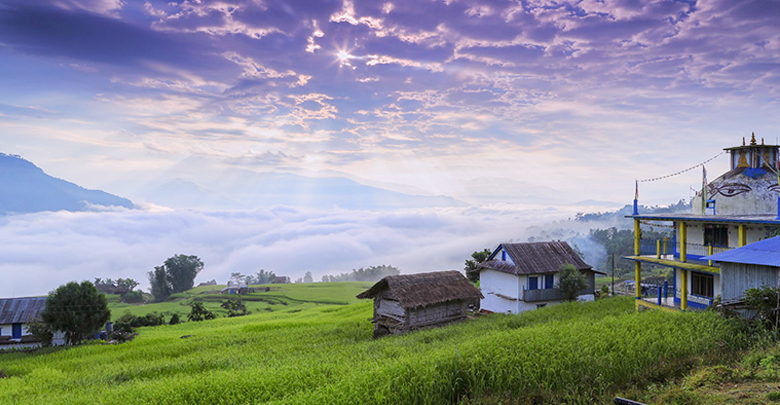
Mera Peak is located in the remote Hinku Valley, in eastern Nepal’s Solukhumbu region, within the boundaries of Makalu Barun National Park. Unlike the busy Everest Base Camp trail, the approach to Mera Peak passes through quieter valleys, smaller villages, and long stretches of untouched wilderness.
The mountain itself is part of a broader massif with three main summits: Mera North, Mera Central, and Mera South. Most climbers today aim for Mera North, which is the highest point at 6,476 meters and the recognized summit for modern expeditions.
One of the defining features of the Mera Peak journey is the changing landscape as altitude increases. The lower sections of the trek pass through dense forests of rhododendron, pine, and bamboo, particularly in spring when the hillsides are alive with color. As the trail climbs higher, these forests give way to alpine meadows and yak pastures around villages like Kothe and Thangnak.
Above Khare, the last permanent settlement, the environment becomes stark and glacial. Vegetation disappears, replaced by rock, ice, and snow. From this point onward, the climb becomes a true high-altitude mountaineering experience, involving glacier travel and snow slopes.
Wildlife sightings are not guaranteed, but the region is known for species such as Himalayan tahr, musk deer, and the colorful danphe, Nepal’s national bird. In the higher, quieter reaches of the Hinku Valley, climbers sometimes notice signs of snow leopards, although actual sightings are rare.
This gradual transition from forested valleys to high glacial terrain is one of the reasons Mera Peak is so memorable. The journey feels like a complete mountain experience rather than a single summit push.
The Altitude Reality: What Makes Mera Peak Challenging
Mera Peak is often considered non-technical, but altitude is what defines the challenge. At 6,476 meters, the air contains nearly half the oxygen available at sea level. No matter how fit you are, your body will slow down.
Walking becomes deliberate and measured. Simple tasks take more effort. Recovery is slower, sleep can be disrupted, and fatigue builds over consecutive days at high altitude. This is completely normal and affects everyone differently.
What surprises many first-time climbers is that strength alone does not determine success on Mera Peak. Endurance, patience, and the ability to move steadily for long periods matter far more. Summit day, in particular, is a long and slow effort, often starting in the early hours of the morning and lasting eight to ten hours or more.
Another important reality is that acclimatization is not fully predictable. Some climbers adapt quickly, while others struggle despite being fit and well prepared. This is why itinerary design and flexibility are so important. A well-planned climb increases the chances of success, but there are never absolute guarantees in high-altitude mountaineering.
Understanding and accepting this reality early helps climbers approach Mera Peak with the right mindset: focused on safety, steady progress, and making good decisions rather than chasing a summit at any cost.
Who Mera Peak Is For
One of the most common questions about Mera Peak is whether it is suitable for beginners. The honest answer is yes, Mera Peak can be climbed by beginners, provided they understand what “beginner” means in a high-altitude context.
Mera Peak does not require advanced technical climbing skills. There are no steep rock faces or complex ice walls on the normal route. However, it does require long days, steady movement at altitude, and the mental strength to keep going when the body feels slow and tired. For this reason, Mera Peak suits climbers who are new to mountaineering but not new to physical challenge.
It is an excellent choice for trekkers who have already completed high-altitude treks such as Everest Base Camp, Annapurna Circuit, or similar routes and want to experience their first summit above 6,000 meters. It is also suitable for fit hikers who train properly and are realistic about the demands of altitude.
At the same time, Mera Peak continues to attract experienced climbers. Many use it as a preparation climb for higher and more technical objectives such as Island Peak, Baruntse, or future 7,000 and 8,000-meter expeditions. The long approach, extended time above 5,000 meters, and glacier travel make it an excellent learning ground.
What matters most is not whether someone is a “beginner” or “experienced,” but whether they are prepared to move slowly, listen to their body, and accept that turning back is sometimes the right decision. Acclimatization is not entirely predictable. Some people adjust easily, while others struggle despite good fitness and preparation. A well-designed itinerary with proper acclimatization greatly improves the chances of success, but it can never remove risk entirely.
Climbers who approach Mera Peak with patience, humility, and respect for altitude are the ones most likely to have a positive and rewarding experience.
Best Time to Climb Mera Peak
Choosing the right season to climb Mera Peak plays a major role in safety, comfort, and summit success. The mountain is typically climbed during two main seasons: spring and autumn.
Spring (April to May) is one of the most popular times to climb Mera Peak. Temperatures gradually warm as winter ends, and snow conditions on the upper mountain are often stable. The lower sections of the trek are particularly beautiful during this season, with rhododendron forests in full bloom. Spring generally offers good summit windows, though occasional afternoon clouds and snowfall can occur.
Autumn (October to November) is considered by many climbers to be the best overall season. After the monsoon clears, the air becomes exceptionally clean, offering sharp mountain views and stable weather. Days are often clear and dry, especially in October. The main challenge in autumn is colder temperatures, particularly at high camp and on summit day, where nights can be extremely cold.
Winter and monsoon seasons are possible but not recommended for most climbers. Winter brings extreme cold, stronger winds, and increased risk of frostbite. The monsoon season brings heavy rain in the lower valleys, snow at higher elevations, slippery trails, and poor visibility.
For most climbers, spring and autumn provide the best balance of safety, conditions, and overall experience. The choice between them often comes down to personal preference for temperature versus visibility.
Routes and Itinerary Options for Mera Peak Climbing
Climbing Mera Peak can be approached through several well-established routes. While the summit objective remains the same, the way climbers reach it varies significantly in terms of pacing, acclimatization, time commitment, and overall risk profile.
The most important distinction between these routes is not scenery, but how altitude is gained and how much flexibility the itinerary allows. Below are the most commonly used and proven itinerary structures, explained in practical terms, along with guidance on who each option suits best.
Standard Mera Peak Climbing (18 Days)
Route progression
Lukla → Paiya → Panggom → Ningsow → Kothe → Thangnak → Khare (acclimatization and basic climbing training) → Mera High Camp → Mera Peak Summit (summit day) → Khare (backup summit day or rest) → Kothe → Thuli Kharka → Zatrwa La Pass → Lukla
This is the classic and most widely used approach to Mera Peak. The route ascends gradually through the Hinku Valley, keeping early elevation gains modest and allowing the body time to adapt before reaching the glacier zone. The acclimatization and training day at Khare is an important transition point, especially for climbers with limited technical experience.
Using Zatrwa La only on the descent reduces early altitude stress while still shortening the return journey. The inclusion of a backup summit day provides essential flexibility in case of weather delays or recovery needs.
This itinerary suits fit trekkers, first-time peak climbers, and mixed-experience groups looking for a balanced and proven structure. Sole Encounters Adventures follows this structure in its standard Mera Peak climb.
https://www.soleencounterstrek.com/trip/mera-peak-climbing
Extended Acclimatization Mera Peak Climbing (19 Days)
Route progression
Lukla → Paiya → Panggom → Ningsow → Chhatra Khola → Kothe → Thangnak → Khare (acclimatization and climbing training) → Khare (additional acclimatization or weather buffer) → Mera High Camp → Mera Peak Summit (summit day) → Khare (backup summit day or rest) → Kothe → Thuli Kharka → Zatrwa La Pass → Lukla
This itinerary follows the same logical ascent as the standard route but slows things down at the most important stage, around Khare. Spending an additional night at the same altitude allows deeper physiological adaptation and often results in better sleep, appetite, and energy higher up.
This approach is particularly well-suited for beginners, climbers over 45 to 50 years old, and anyone who has previously experienced difficulty with altitude. Although only one day longer on paper, the added acclimatization often makes a noticeable difference above 5,000 meters.
This structure is reflected in the 19-day extended acclimatization itinerary operated by Sole Encounters Adventures.
https://www.soleencounterstrek.com/trip/mera-peak-climbing-19-day
Short Mera Peak Route via Zatrwa La (14–15 Days)
Route progression
Lukla → Chutanga → Zatrwa La Pass → Thuli Kharka → Kothe → Thangnak → Khare (limited acclimatization) → Mera High Camp → Mera Peak Summit (summit day) → return via same route → Lukla
This is the fastest route to Mera Peak and also the most demanding in terms of acclimatization. By crossing Zatrwa La early, altitude is gained rapidly, leaving little time for the body to adapt before reaching the higher Hinku Valley.
This option is suitable only for strong, experienced trekkers who already understand how their body responds to altitude and are comfortable with compressed schedules. It is not recommended for beginners or climbers who want a more forgiving ascent profile.
Hybrid Route: Gradual Ascent with Faster Exit (16–17 Days)
Route progression
Lukla → Paiya → Panggom → Ningsow → Kothe → Thangnak → Khare (acclimatization and basic climbing training) → Mera High Camp → Mera Peak Summit (summit day) → Thuli Kharka → Zatrwa La Pass → Lukla
This structure combines a conservative ascent through the Hinku Valley with a quicker descent after the summit. By delaying the Zatrwa La crossing until the end, early altitude stress is minimized while overall trip length is reduced.
It is a practical choice for climbers with limited time who still want a responsible acclimatization profile and is often used as a variation of the standard route when schedules are tight.
Mera Peak and Island Peak via Amphu Lapcha Pass (22–25 Days)
Route progression
Lukla → Paiya → Panggom → Ningsow → Kothe → Thangnak → Khare (acclimatization and climbing training) → Mera High Camp → Mera Peak Summit (summit day) → Amphu Lapcha Base Camp → Amphu Lapcha Pass → Chukhung (recovery and acclimatization) → Island Peak Base Camp → Island Peak Summit (second summit day) → Dingboche → Namche Bazaar → Lukla
This route moves beyond a single-peak objective into full alpine expedition territory. Combining two summits with a technical high pass requires strong endurance, rope skills, and sound decision-making while fatigued. Time spent above 5,000 meters is extensive, and logistics are significantly more complex.
This itinerary is suitable only for experienced climbers preparing for higher Himalayan objectives and is operated by Sole Encounters Adventures as a combined expedition.
https://www.soleencounterstrek.com/trip/mera-peak-and-island-peak-climbing-via-amphu-laptcha-pass
Drive-Based Approach to Mera Peak (20–22 Days)
Route progression
Kathmandu → Drive to Salleri or Phaplu → Ringmo → Nunthala → Bupsa → Join Hinku Valley route → Kothe → Thangnak → Khare (acclimatization and basic climbing training) → Khare (additional acclimatization or buffer day) → Mera High Camp → Mera Peak Summit (summit day) → Khare (backup summit day or rest) → Kothe → Thuli Kharka → Zatrwa La Pass → Lukla
Instead of flying directly to Lukla, this approach begins with a road journey into the lower Solu region, followed by several days of trekking through traditional villages before entering the Hinku Valley. These early days remain well below 3,000 meters, allowing the body to begin adapting gradually.
This route is particularly suitable for beginners, older climbers, and anyone with flexible travel time who prefers a conservative altitude profile or wants to reduce reliance on Lukla flights. The trade-off is a longer itinerary, but the reward is greater resilience and acclimatization.
Route Choice and Personalization
No two climbers respond to altitude in exactly the same way, and Himalayan conditions are never fixed. Age, fitness, previous altitude experience, and available time all influence which route makes the most sense.
Alongside the itineraries described above, Sole Encounters Adventures regularly adjusts Mera Peak climbs by adding acclimatization days, modifying approach or exit routes, or incorporating drive-based alternatives when conditions or individual needs require it. The guiding principle is simple: the itinerary should support the climber, not force the climber to fit the itinerary.
Preparation for Mera Peak: Training, Mindset, and Practical Readiness
Mera Peak is often described as a beginner-friendly Himalayan peak, but that description only holds true for climbers who prepare properly. At 6,476 meters, success depends far more on endurance, patience, and sound decision-making than on technical difficulty alone. Preparation for Mera Peak should focus on physical conditioning, mental readiness, and practical readiness in the mountains.
Physical Preparation: Training for Endurance, Not Speed
The most common mistake climbers make is underestimating how demanding long days feel at altitude. Summit day in particular is slow, cold, and sustained. Training should reflect this reality.
What matters most is not speed, but the ability to move steadily for long periods.
Key physical requirements include:
-
Walking uphill for 6 to 8 hours at a controlled, conversational pace
-
Comfortably carrying a 10 to 15 kg daypack
-
Strong legs and joints for extended descents
Effective preparation includes regular hiking, stair climbing, or incline walking, combined with basic strength work for legs and core.
Mental Preparation: Self-Awareness, Patience, and Judgment
Altitude affects mood, sleep, motivation, and confidence. Understanding this in advance is an important part of being prepared.
Climbers should be comfortable with the following realities:
-
Acclimatization is not fully predictable
-
Some days will feel harder than expected
-
Turning back can be the correct and responsible decision
A flexible mindset supports better communication and safer decisions at altitude.
The Role of Guides in Pacing, Monitoring, and Decision-Making
At high altitude, fatigue, cold, and low oxygen can cloud judgment. Experienced guides play a key role in monitoring individuals, adjusting pace, and making conservative decisions when needed.
Guides:
-
Observe walking pace, breathing, appetite, and recovery
-
Encourage regular hydration and nutrition
-
Watch for early signs of altitude-related illness
-
Adjust plans promptly if conditions or health require it
In remote areas like the Hinku Valley, timely decisions and clear communication are critical. This approach reflects how Sole Encounters Adventures manages Mera Peak climbs, with a strong emphasis on health, pacing, and readiness to coordinate rescue or evacuation if required.
Packing for Mera Peak: What to Bring and Why It Matters
Packing for Mera Peak is about warmth, layering, and reliability, not carrying excessive equipment. Conditions vary by season, route choice, and itinerary length, so gear should always match the specific plan rather than a generic checklist.
Below is a practical overview of the core items most climbers need.
Essential Clothing
-
Insulated down jacket suitable for high altitude
-
Waterproof and windproof shell jacket and pants
-
Warm mid-layers such as fleece or light insulation
-
Thermal base layers (top and bottom)
-
Trekking pants and lightweight shirts
-
Warm hat, sun hat, and neck gaiter
-
Insulated gloves and waterproof outer gloves
-
Several pairs of trekking and thermal socks
Footwear
-
High-altitude mountaineering boots suitable for 6,000-meter peaks
-
Trekking boots or shoes for lower sections
-
Gaiters, if not integrated into boots
Technical Equipment
-
Crampons compatible with your boots
-
Climbing harness
-
Helmet
-
Ice axe
-
Headlamp with spare batteries
(Group climbing equipment such as ropes is normally provided on guided climbs.)
Personal Gear
-
Sleeping bag rated to at least -15°C to -20°C
-
Sunglasses with high UV protection
-
Sunscreen and lip balm
-
Water bottles or hydration system
-
Personal first-aid kit and medications
-
Snacks and energy food you are accustomed to
Gear Checks and Ongoing Support
Packing does not end once you arrive in Nepal. On a professionally run climb, equipment is reviewed multiple times.
Before leaving Kathmandu, guides from Sole Encounters Adventures carry out a detailed gear check to ensure boots, clothing, and technical equipment are suitable for the conditions ahead. Any missing or inadequate items can be rented or replaced at this stage.
Once on the mountain, guides continue to monitor how gear is being used, helping climbers adjust layering, gloves, and pack weight as temperatures and conditions change.
In addition, after climbers get in touch and confirm their preferred season, route, and itinerary, Sole Encounters Adventures provides a detailed, trip-specific packing list tailored to the actual plan rather than a one-size-fits-all checklist.
A Final Word on Readiness
If you can walk for long hours at a steady pace, remain patient when plans change, communicate openly about how you feel, and trust experienced guidance, you are likely ready for Mera Peak.
Preparation does not guarantee a summit, but it greatly improves the chances that the experience will be safe, well-managed, and rewarding.
What Summit Day on Mera Peak Is Really Like
Summit day on Mera Peak is not about speed or strength. It is about patience, rhythm, and making steady decisions in cold, thin air. For many climbers, it is the longest and most demanding day of the entire journey, both physically and mentally.
Understanding what this day actually involves helps set realistic expectations and reduces anxiety long before reaching high camp.
The Early Start and Cold Reality
Summit day usually begins very early, often between midnight and 2:00 am, from Mera High Camp. Temperatures are well below freezing, and the environment feels stark and quiet. Simple tasks take longer in the cold, and even putting on boots or gloves requires patience.
This early start is deliberate. Snow conditions are firmer before sunrise, winds are often calmer, and there is more time available to manage the long ascent and descent safely.
Guides carefully pace the group from the beginning, emphasizing slow movement and controlled breathing rather than pushing forward quickly.
Moving on the Glacier
Shortly after leaving camp, climbers rope up and step onto the glacier. This is where the training done at Khare becomes important. The terrain itself is not highly technical, but crevasses are present, and roped travel is essential.
Movement on the glacier is steady and methodical:
-
Short steps
-
Regular breathing
-
Frequent but brief pauses
The goal is to conserve energy and keep the body within a sustainable rhythm. At this altitude, moving too fast early almost always leads to fatigue later.
The Long, Gradual Ascent
One of the defining features of Mera Peak is the length of the summit push. The slope is generally moderate, but the distance feels long due to the altitude and cold. Progress can feel slow, and that is completely normal.
Climbers often notice:
-
Shallow breathing despite conscious effort
-
Slower thinking and reduced coordination
-
A strong focus on the next few steps rather than the summit
This is where mental preparation matters. Breaking the climb into small, manageable sections helps maintain focus and calm.
Guides continuously monitor the group, watching for changes in pace, posture, or communication. Small adjustments in speed or rest timing can make a significant difference over several hours.
The Final Section to the Summit
The final part of the climb is usually steeper and may involve fixed ropes, depending on conditions. While technically straightforward, this section feels demanding because of accumulated fatigue and very low oxygen levels.
Climbers often experience the strongest emotional and physical challenge here. Clear guidance, steady encouragement, and conservative decision-making are essential.
Not every climber reaches the summit, and that outcome is treated with respect. Turning back at the right moment is considered a successful decision when conditions or health do not allow a safe continuation.
Time on the Summit
Time spent on the summit is usually brief. Temperatures are cold, winds can increase quickly, and energy reserves are limited. Most climbers take a few photos, absorb the moment, and begin descending within a short time.
On clear days, the views are expansive and unforgettable, but the summit is not the end of the challenge.
The Descent: Often the Hardest Part
Descending back to high camp and onward to Khare requires as much attention as the ascent. Fatigue, cold, and dehydration often become more noticeable at this stage.
Guides maintain close supervision during the descent, ensuring:
-
Safe movement on steeper sections
-
Continued hydration and food intake
-
Awareness of balance and coordination
Many incidents in the mountains occur on the way down, which is why a calm, controlled descent is treated as a priority.
How Guides Support Climbers on Summit Day
Throughout summit day, guides from Sole Encounters Adventures focus on pacing, communication, and individual well-being. Decisions are made continuously based on weather, group conditions, and individual responses to altitude.
This includes:
-
Adjusting pace for individuals when needed
-
Encouraging regular hydration and small snacks
-
Monitoring for early signs of altitude-related issues
-
Making clear, timely decisions about whether to continue or turn back
Summit success is never treated as more important than safety. A well-managed summit day is one where climbers feel supported, informed, and never rushed.
A Realistic Perspective
For many climbers, summit day is not dramatic or heroic. It is quiet, cold, and deeply personal. Success is measured not only by reaching the top, but by how safely and responsibly the day is managed.
Understanding this in advance helps climbers approach the day with calm expectations and trust in the process.
Safety, Guides, and Why Operator Experience Matters
At 6,476 meters, safety on Mera Peak is not determined by one decision or one day. It is the result of many small, correct choices made consistently, often before a problem becomes obvious. Route design, pacing, acclimatization, communication, and leadership all play a role, but the human element, particularly the quality of guiding, is what ultimately holds everything together.
Why Local Knowledge Makes a Real Difference
Mera Peak sits in the remote Hinku Valley, an area with limited infrastructure, no road access, and long distances between settlements. Weather patterns can shift quickly, trails can change from season to season, and conditions on the glacier vary year to year.
Local operators with long-term experience in this region understand:
-
How the weather typically behaves at different elevations and times of day
-
Which sections of the trail are prone to snow buildup, ice, or washouts
-
When is it safer to delay a summit attempt rather than push on
-
How to adjust routes and schedules when conditions are not ideal
This kind of knowledge cannot be improvised on the mountain. It comes from repeated exposure, observation, and decision-making over many seasons.
The Guide’s Role Beyond Navigation
On a Mera Peak climb, guides are not simply leading the way. They act as pace managers, observers, decision-makers, and first responders.
A professional guide is constantly assessing:
-
Walking speed and breathing patterns
-
Changes in appetite, hydration, and sleep
-
Communication, mood, and coordination
-
Recovery from one day to the next
Guides also control pacing, often slowing climbers down even when they feel strong early on. This conservative approach reduces cumulative fatigue and lowers the risk of altitude-related illness later in the climb.
Just as importantly, guides create an environment where climbers feel comfortable speaking honestly about how they feel. Open communication allows problems to be addressed early, when options are still available.
Altitude Illness Awareness and Early Intervention
Altitude-related illnesses rarely appear suddenly. They usually develop gradually, with subtle warning signs that can be easy to ignore without experience.
Responsible guiding involves:
-
Recognizing early symptoms and responding promptly
-
Encouraging rest, hydration, or descent when needed
-
Avoiding pressure to continue when conditions are not right
-
Making decisions based on health rather than schedules
In the Hinku Valley, early intervention is critical. Delaying action at altitude often reduces options later and increases risk.
Emergency Planning and Rescue Preparedness
Even with good preparation and conservative decision-making, emergencies can still occur. What matters is how well a team is prepared to respond.
Experienced operators plan for contingencies from the outset. This includes:
-
Clear communication systems
-
Established evacuation procedures
-
Knowledge of helicopter access points and limitations
-
Coordination with local authorities and rescue services
Guides are trained to manage situations calmly, assess whether evacuation is necessary, and act decisively when it is. These decisions are rarely dramatic, but they are critical.
Group Size, Structure, and Decision Quality
Smaller, well-managed groups allow for better observation, clearer communication, and faster responses when issues arise. Large groups often struggle to move at a consistent pace and can mask individual problems.
Good operators limit group size and ensure appropriate guide-to-climber ratios, particularly on summit day. This allows guides to give attention where it is needed most and adapt plans based on real conditions rather than assumptions.
Transparency as a Trust Signal
One of the clearest indicators of a responsible operator is transparency. Detailed itineraries, clear explanations of acclimatization strategy, realistic timelines, and honest discussion of risks all signal that safety is prioritized over speed or appearances.
This approach is reflected in how Sole Encounters Adventures structures its Mera Peak climbs. Routes are designed with acclimatization in mind, group sizes are kept manageable, and guides are empowered to make conservative decisions without pressure to push for a summit.
Rather than presenting Mera Peak as an easy achievement, the climb is treated as a serious high-altitude objective that requires respect, patience, and flexibility.
A Balanced Perspective on Risk
Climbing Mera Peak is not inherently dangerous, but it is unforgiving of poor decisions. Most incidents in the Himalayas are linked not to terrain, but to rushed schedules, ignored symptoms, or inadequate oversight.
A well-run expedition does not eliminate risk, but it manages it intelligently. When planning, guiding, and decision-making align, climbers give themselves the best chance of a safe and rewarding experience, regardless of whether they reach the summit.
Closing Thought Before the Conclusion
Choosing how to climb Mera Peak is not just about route or duration. It is about choosing an approach that values health, judgment, and long-term well-being over short-term outcomes.
With this understanding in place, the final section brings the guide to a close by helping readers reflect on their goals and make informed decisions.
Final Thoughts: Making an Informed Decision About Mera Peak
Climbing Mera Peak is not defined by a single moment on the summit. It is shaped by the decisions made long before the climb begins, how the body is allowed to adapt, and how challenges are handled when conditions change.
For many climbers, Mera Peak represents a first step into high-altitude mountaineering. For others, it is a deliberate preparation climb for more demanding Himalayan objectives. In both cases, success is not measured only by standing on the summit, but by whether the experience is managed safely, responsibly, and with respect for the mountain.
The most important takeaway is that there is no single right way to climb Mera Peak. Shorter itineraries demand experience and tolerance for compressed acclimatization. Longer routes provide comfort and flexibility but require more time and patience. Drive-based approaches reduce reliance on flights and allow gradual adaptation, while technical combinations such as Amphu Lapcha introduce a very different level of commitment.
Understanding these differences allows climbers to match their goals, experience, and risk tolerance to the right approach, rather than choosing an itinerary based only on duration or cost.
Altitude is always an individual experience. Some climbers adapt smoothly; others struggle despite good fitness and preparation. A well-designed itinerary improves the odds, but it does not override biology. Accepting this reality early leads to better decisions, less pressure, and a more positive overall experience.
This is also why the quality of guiding and planning matters. Clear itineraries, realistic pacing, honest communication, and the willingness to turn back when needed are all indicators of a responsible approach to the mountain. These elements are consistently emphasized in how Sole Encounters Adventures approaches Mera Peak climbs, where safety, transparency, and adaptability guide every decision.
For those considering Mera Peak, the best preparation is not just physical training, but understanding what the climb involves, what it asks of you, and how you respond when plans need to change. When approached with patience and respect, Mera Peak offers not just a summit, but a meaningful introduction to the realities of high-altitude mountaineering.
Whether Mera Peak becomes a personal milestone or a stepping stone to higher objectives, approaching it thoughtfully ensures that the experience remains rewarding long after the climb is over.
Recent Posts
.jpg)
3rd Jul, 2025
.jpg)
4th Jul, 2025
.jpg)
4th Jul, 2025
.jpg)
7th Jul, 2025
.jpg)
8th Jul, 2025
.jpg)
8th Jul, 2025
.jpg)
8th Jul, 2025

10th Jul, 2025